Showing posts with label Sand Martin. Show all posts

Tuesday, 22 July 2014

House Martins no fluke

I went back to the Billinge site this evening with a view to catching some more Swallows at the roost and to see if any House Martins were roosting with them. While I was putting up the first net a juvenile Sedge Warbler appeared in the willows beside me. This was a first for the site, for me at least, and well away from the nearest breeding population so obviously a bird on passage. It made its way into the net soon after I had set up along with 5 Willow Warblers, a Chiffchaff , a Blackcap and 2 Goldfinches, not a bad start.


Juvenile Sedge Warbler 22/07/14
There were more Swallows around than last night with an esimated 400 present and there were at least 2 Sand Martins and 4 House Martins with them. The conditions were perfect and the first Swallows were caught well before the light started to fade. A Sand Martin was also caught along with 2 House Martins showing that the 2 caught last night was no fluke. The final tally of Swallows for the evening was 54 and brought the total ringed at the roost over the last few weeks to 386.


Juvenile House Martin 22/07/14


Juvenile Sand Martin 22/07/14


Juvenile Swallow 22/07/14

Ringing Totals for 22/07/14

Swallow 54
House Martin 2
Sand Martin 1
Sedge Warbler 1
Blackcap 1
Willow Warbler 5
Chiffchaff 1
Goldfinch 2
Total 67

Friday, 21 March 2014

Bits and bobs

There have been a few bits and bobs of interest so far this week. On Monday an early morning visit to Amberswood Common with John G and Wayne produced several Crossbills that were picked up from their calls as they passed overhead. There were a minimum of 3 birds involved but we couldn't get an accurate count through the tree cover, although I suspect there were actually 4 or 5. I had only remarked that the site looked good for Crossbills a few days earlier but finding them so soon after was still a surprise as none had been reported in the area. A Common (Mealy) Redpoll was also seen the same morning along with 6 of the Lesser variety.

The highlights of a short visit to Scotman's Flash yesterday were my first Sand Martins of the year with 4 flying south and another Common Redpoll that was seen in the company of 2 Lesser Redpolls. Chiffchaffs have been turning up here and there all week and one ringed yesterday had 'pollen horns' which is a clear sign of the bird having recently arrived from warmer climes.

A Chiffchaff with 'pollen horns'.

Pollen horns are a sticky residue that mat the feathers around the bill and result from the bird feeding on insects in flowers and possibly from drinking nectar too.
This morning I was joined by Wayne for a very brief Siskin ringing session in the garden and then we went to survey an area for Willow Tits not far from home and adjacent to the M6. We located one pair and Wayne soon found the partially excavated nest hole. This particular site looks good for at least 2 pairs but only time and much field work will tell. While checking out this area we picked out the flight calls of yet more Crossbills and this time we could see it was a party of 5 flying north. There doesn't seem to have been any other reports of Crossbills in the area or region so the two sightings this week don't appear to have been part of a wider movement. Crossbills breed very early so both of these sightings are likely to have been wandering family parties; if that is the case it would be really interesting to know where they had bred.

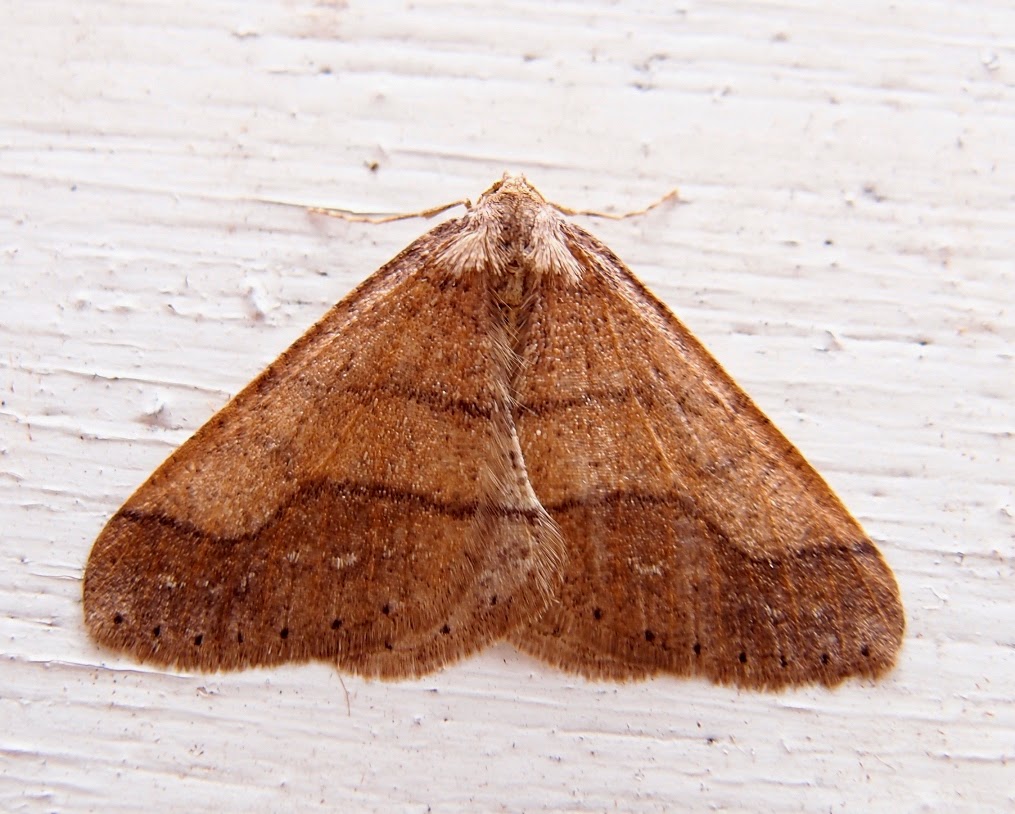
The moth trap has been producing routine fare all week but on checking it today there was a new species for the garden in the form of a Grey Shoulder-knot. This species is more common in southern England but is much scarcer and more sparsely distributed in the north west.

Grey Shoulder-knot (Lithophane ornitopus), a first for the garden. 
Moth trap totals this morning were:
Grey Shoulder-knot 1
Satellite 1
Twin-spotted Quaker 1
Oak Beauty 1
Early Grey 2
Dotted Border 2
Clouded Drab 5
Hebrew Character 8
Common Quaker 16

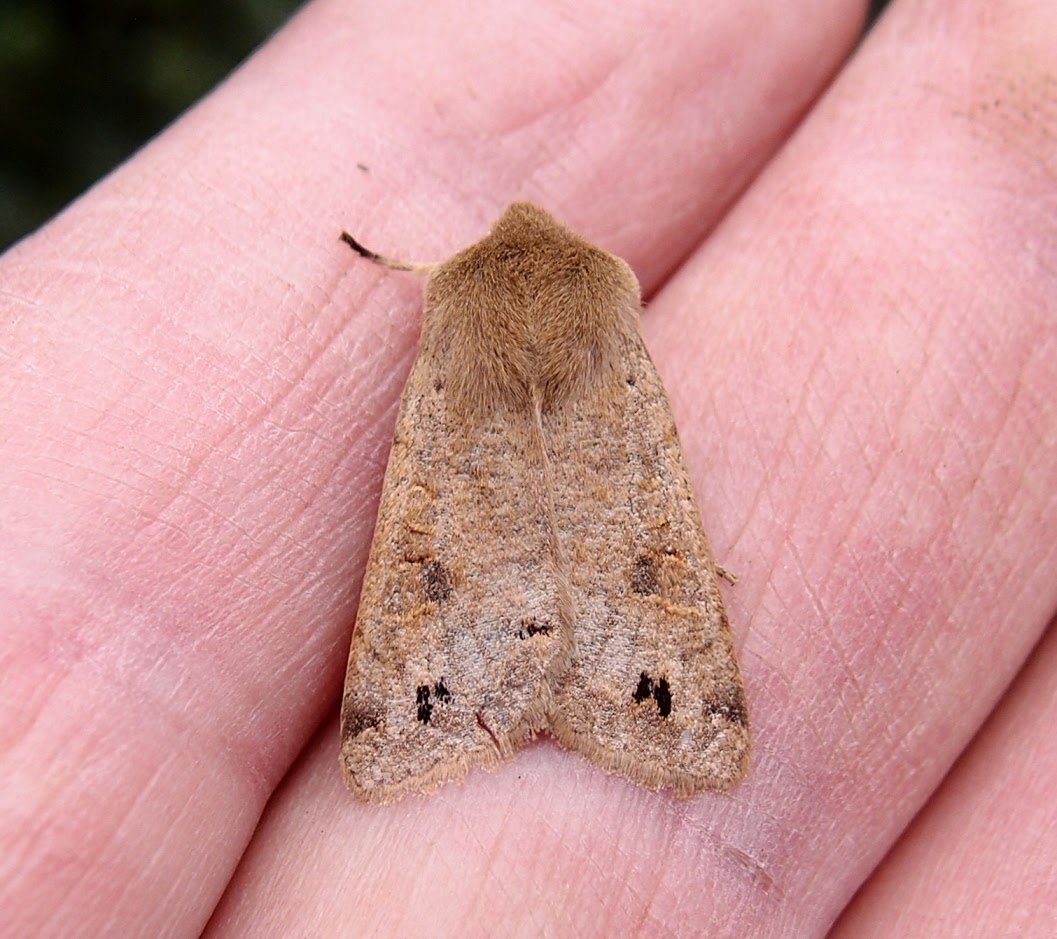
The Satellite (Eupsilia transversa)

Dotted Border (Agriopis marginaria)

Early Grey (Xylocampa areola)

Oak Beauty (Biston strataria)

Twin-spotted Quaker (Orthosia munda)
Some colder nights are forecast so moth catches are likely to drop off for a while but the birding should get even more interesting as spring migration 'hots up'.


Sunday, 19 August 2012

Back after a short break on Anglesey 7th - 11th August

It is over two months since my last post, this has been largely due to protracted problems with my broadband connection which was only finally resolved after I changed service provider. Pressure of work and the miserable weather also playing a part. Hopefully I will be able to post more regularly from now on.

Back to the subject of the post and a recent camping trip with my youngest son, Jack, and the dog on Anglesey. It wasn't a birding trip and was just a chance to get away and relax for a few days. My holidays coincided with a spell of fine weather so we packed the car and headed off to our favourite camp site near Malltraeth. We arrived in the late afternoon and were greeted by 3 Little Egrets on the pool by the entrance to the site. This pool held up to six Little Egrets and 3 Grey Herons over the next few days.

Once we had set up camp we went for an evening walk at Aberffraw. We hadn't gone far towards the beach when I noticed a Short-eared Owl flying over quite high. This was a bird I hadn't expected to see so I was really surprised when it was followed in quick succession by another two.

One of 3 Short-eared Owls at Aberffraw
I didn't take a moth trap but the lights are left on all night in the camp site toilets and usually attract a variety of critters. Pick of the bunch was a Small Blood-vein.

Small Blood-vein
We made our usual pilgrimage to St Cwyfan, the Church in the sea, on what turned out to be another glorious day. The Sand Martin colony in the earth cliff at the top of the beach was still quite active. I tried to get a few shots of the birds in flight but failed to get anything other than record shots. Two Grey Herons made easier subjects when they had an aerial battle over a feeding area.

St Cwyfan's, near Aberffraw

St Cwyfan's, near Aberffraw
 
Juvenile Sand Martin.

Adult Sand Martin preening on the wing.

Grey Herons

Grey Herons
The first longish walk of the trip was along the beach from Newborough Forest to Abermenai point on a scorcher of a day. Best of birds here was a Merlin attacking a small flock of Linnets at the point.

Bryn enjoys the beach off Newborough Warren

and the impressive dunes

View to Snowdonia from Abermenai point.
Field Grasshopper picked up in the dunes
We also made a couple of visits to Red Wharf Bay and explored the southern side below Pentraeth Forest. The habitat along this section of coast looks really good for holding migrants and is an area I will visit again.

Red Wharf Bay

Yours truly with Bryn

An obliging Common Darter

An obliging Common Darter
One constant of any visit to Anglesey are the Hawk trainers flying out of RAF Valley and there are great viewing areas near Rhosneigr.