Showing posts with label Ringing totals. Show all posts

Friday, 12 January 2018

Still here, and ageing.

Apologies for the lack of posts in recent weeks but there has been a lot going on on the domestic and family front to say the least. Added to that the birding has been fairly quiet around here so there hasn't been a huge amount of interest to blog about anyway. For what it is worth here is a summary of what I have been doing on the avian front over the last few weeks.

A total of 121 birds were ringed during December and another 68 were retrapped or resighted with much of that total coming from birds ringed in the garden. Goldfinches topped the totals with 36 ringed and Starling topped the retraps / resightings with 39 records, mainly resightings of colour-ringed birds. The only unusual ringing activity involved Siskins with a total of 7 ringed (6 in the garden and 1 at Billinge) which is an exceptional number for December.

Interestingly, the first Siskin was seen on the feeders in garden on 20th November and it was already ringed. A few days later 2 were coming to the feeders, both of which were wearing rings and both were adults so there is a chance they were returnees rather than birds that had been ringed elsewhere. I expected to catch one or both of theses birds as they continued to visit fairly regularly so it was a bit of a surprise when I caught 3 new birds in early December. A few Siskins continued to visit the feeders on a daily basis throughout December and at least 8 individuals were involved. In previous winters it has been mid to late January before they start coming to the garden on a regular basis so to have them start two months early is really unusual for here. This change doesn't seem to have been caused by any sort of food shortage as there are still plenty seeds in the alder cones. In fact Goldfinches were more hit and miss in the garden during December and this has continued on into January as they are spending quite a lot of time feeding in alders. This shows there is still an abundance of alder seeds to be had in the local area and it is probably also true of the wider countryside.

I have almost finished submitting my 2017 ringing data to the BTO and just need to do some final checks. Provisional totals for 2017 ended up at 4183 new birds and there were another 958 recaptures or resightings. The top 5 species ringed accounted for more than half the total as detailed below (again provisional totals for now):

Species        New Birds         Retraps/resightings
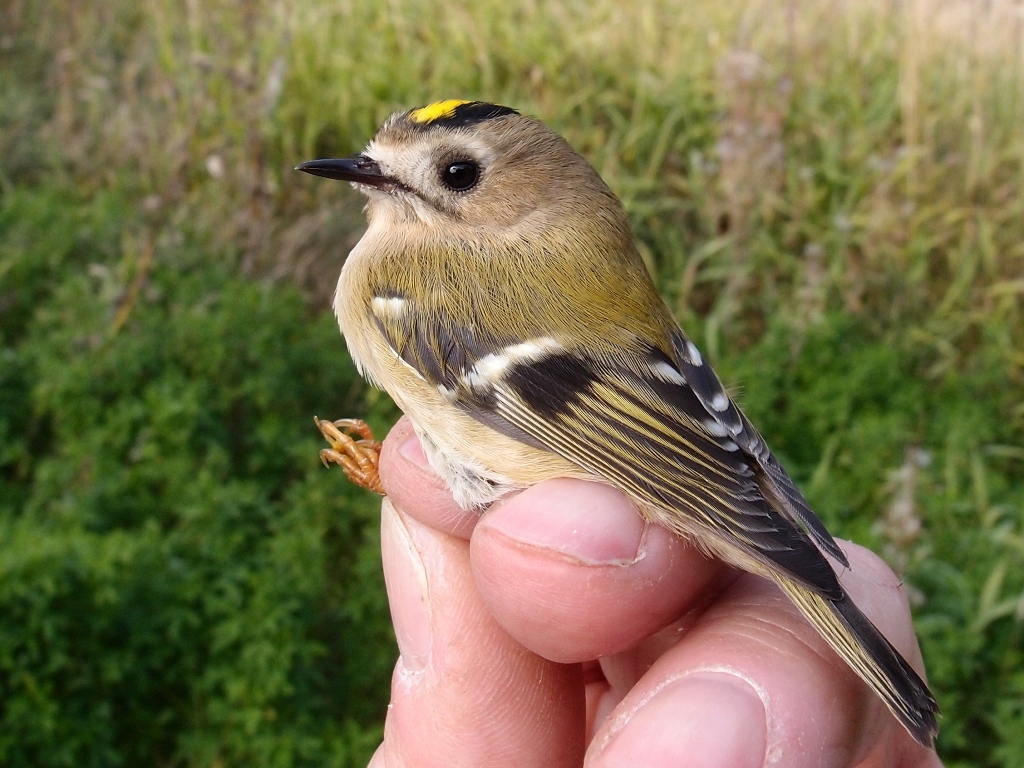
Goldcrest         669                            30
Starling            621                          567
Redwing          425                              0
Goldfinch         366                            41
Chiffchaff         295                            30

I have also been checking through the gulls and waterfowl that come to bread at Orrell Water Park (as usual) and have photographed the ring numbers of 3 Black-headed Gulls (2 from Germany and 1 from Scotland), a ringed Coot (from south Wales) and a Canada Goose (from Cheshire). All could be considered regulars to a greater or lesser degree as they were all recorded more than once during December and one of the German gulls, the Coot and Canada Goose have been recorded in previous winters.

EZ33149 was ringed as a chick at Elvanfoot, South Lanarkshire on 20/06/2017 which is 222 km NNW of Orrell Water Park.


Sometimes I only need to take a few photos to get the full ring number but in many cases I have to take dozens to be sure. While these are crops most of my photos of ringed birds are just of their legs rather that the whole bird.

Best foot forward. This is the German ringed bird from the Helgoland scheme. It has been recorded 11 times so far this winter but I still haven't received the ringing details so don't know when or where in Germany it was ringed.

I am spoiled for choice when it comes to photos of this bird, or at least its legs. IA141745 has been recorded 15 times so far this winter and over 70 times since the first sighting in October 2012. It was originally ringed as an adult in Bohmke und Werder, Mecklenburg - Vorpommern, Germany on 29/04/2012 and is pretty much a fixture at the park between October and February.

GR03863 is what you could call an old(ish) Coot as it was originally ringed as a first-year on 23/12/10 so is a little over 7 years old. It is well short of the UK longevity record for the species which currently stands at just over 15 years but it is probably older than your average Coot. It was ringed 236 km south at Comeston Lakes, near Penarth in the Vale of Glamorgan during a spell of very cold weather but has been recorded up here 17 times since, most recently on 27/12/2017, so was probably a cold weather refugee when ringed.

The New Year hasn't seen much in the way of change as yet. Both German ringed Black-headed Gulls were photographed on the 1st and both have been recorded since. A few Siskins continue to visit the feeders in the garden on a daily basis and another 2 have been ringed. I have also resighted 25 different colour-ringed Starlings at the feeders and caught and colour-ringed another 2.


7 of the 8 Siskins ringed this winter have been adults. This adult male was caught on 10/01/2018. All the wing feathers including the coverts were relatively fresh, the colours were intense so there was no sign of any moult limits


The tail was equally unworn and again the colours were intense but the shape of the tail feathers was at the more pointed end of the range for adults. Adults with a relatively pointed tail like this can catch out the inexperienced and unwary but close examination reveals a neat pale fringe to the edges of all tail feathers and no signs of wear. In this shot you can just see that the primary tips are similarly fresh looking so no doubt it is an adult.

N34 is a female and was originally ringed as a juvenile on 18th May last year.
One notable absentee from the garden this winter has been Blackcap. I usually get one or two over the course of a winter and the first sighting usually comes before the end of December so to not have seen one by now is bucking the trend of the last few years. While Blackcaps have been absent I have got 2 Goldcrests feeding on the fat balls and fat cakes. This is relatively new behaviour for Goldcrests in my garden and although I have seen it before it is unlikely to become common and widespread, as happened with Long-tailed Tits some years back, as they are not very social in winter or long lived so the opportunities for such behaviour to spread in the population are not there.

Not the best photo but it is what you might call a decent record shot. The tail shape is in the intermediate range but it could be an adult and is possibly an individual that came to the feeders last winter. In addition to feeding on the fat balls and fat cakes direct it also picks up tiny fragments that have fallen on to the wire mesh and branches below or on fragments that have been wiped on the wire mesh and branches by other birds when cleaning their bills.
Another even more notable absentee from the garden, and one that is getting increasingly easy to forget, has been the humble House Sparrow. I haven't seen one at the feeders this year and only saw one during the whole of December, which is a really sorry state of affairs. If records from my garden and the local area are anything to go by they are still in marked decline around here.

So that brings things up to date, more or less, and with a bit of luck it won't be the best part of 4 weeks before my next post.


Monday, 2 October 2017

September Ringing Totals

I have been quite active over the last couple of weeks but not had time to blog about any of the ringing sessions for one reason or another. There were no major surprises and Goldcrests dominated most of the Billinge catches as usual, although a Spotted Flycatcher caught on the 23rd was both unexpected and a late(ish) record.

Looking at the month as a whole the total of 777 new birds ringed at Billinge is only 1 short of the total achieved last year and was much better than expected given the weather. Goldcrest took top slot with 269 being 32 up on last September's total while 2nd placed Chiffchaff was 32 down with a total of 143. Blackcap numbers were well down with 40 ringed compared to 88 last year but on the other hand 2 Spotted Flycatchers and 4 Redstarts continued the autumns's exceptional run of records for those species. It was a disappointing month for controls with a single Goldcrest being the only bird caught that had been ringed elsewhere (ringing details have yet to be received).

BILLINGE RINGING TOTALS SEPTEMBER 2017
Species
New
Retraps/controls
Sparrowhawk
1

Great Spotted Woodpecker
1

Jay
1

Goldcrest
269
12
Blue Tit
44
6
Great Tit
39
11
Coal Tit
12

Willow Tit
1

Long-tailed Tit
18
1
Chiffchaff
143
10
Willow Warbler
16

Blackcap
40

Whitethroat
2

Wren
3

Blackbird
7
1
Song Thrush
10
1
Spotted Flycatcher
2

Robin
22
2
Redstart
4

Dunnock
4

Grey Wagtail
5

Tree Pipit
2

Meadow Pipit
11

Chaffinch
42
1
Bullfinch
6
1
Greenfinch
6

Linnet
2

Lesser Redpoll
7

Goldfinch
23

Yellowhammer
25

Reed Bunting
28

Total
777
39

I also ringed 138 birds in my garden during the month with 91 Goldfinches claiming top slot there. 

Wednesday, 16 March 2016

More Siskins and the BLB Blackcap

Another short ringing session in the garden produced 7 new and 5 retrap Siskins along with a new Goldfinch, a new Chaffinch and a retrap Blue Tit. Not long after the net was taken down a ringed Blackcap appeared and was photographed, yet again, and confirmed it was the usual Belgian ringed individual.


Male Siskin 16/03/16
The 7 new Siskins caught this morning brought the total for the year to 133. The 5 retraps included 4 that were ringed in the past few weeks - one from 11/02, another from 19/02 and two from 28/02. The other retrap was more interesting in that it was ringed on 01/03/2014 and is only the second between year retrap Siskin I have recorded.  All the Siskins that visit my garden are late winter visitors or spring migrants and it is interesting that this bird returned having missed a year (most Siskins stayed on or near their breeding grounds last year). The previous between year retrap involved an individual that was ringed on 21/03/13 and retrapped on 01/03/2014.


Male Siskin 16/03/16
Female Siskin 16/03/16
There were around 30 Siskins visiting the garden today and if previous good years are anything to go by some could be visiting the feeders right up to the end of March or just into early April, so there is scope for catching a few more yet.

I still haven't had the original ringing details for the Belgian ringed Blackcap but it has been recorded in the garden nearly every day for the past two months. It usually feeds close to a window so it isn't too much trouble to get enough photographs of the ring to verify the number. The photos don't usually show the bird very well as the aim is to confirm the ring number rather than get a nice portrait. The first summer visiting Blackcaps should be arriving in the next week or two so it will be interesting to see if this wintering bird overlaps with any of them.


138 are the first three numbers on this Blackcap's ring. 

Sunday, 11 October 2015

Billinge: 5th-11th October

I haven't had any more Yellow-browed Warblers or dodgy Redpolls but it has been a very productive week. I have managed to get out on 5 mornings, including today, and it is fair to say that those early starts have taken their toll and I am feeling cream crackered as I write this. Highlights have included the continued passage of Goldcrests, some reasonable thrush movements and a few late-ish warblers.

The number of Goldcrests moving through this site continues to impress me with the 95 ringed this week bringing the total for the month to 162 and the total for the autumn to 447. Redwings and other thrushes started arriving early this autumn with the first big arrival on the east coast and northern isles happening on the 5th. It didn't take long for some of these birds to move across and down to the west side of the country and around 200 passed over the site on the 8th. Similarly there has been a good movement of Song Thrush in the last week with small numbers 'zipping' over the site each day. Song Thrush is often under-recorded as a passage migrant as they can be hard to pick out when mixed in with flocks of Redwings but at least 20 have passed through on each of the last 2 days. Warblers are thin on the ground now but there was a little flurry of Chiffchaffs in the week with 5 on the 8th being a good number for the date. Many of the Blackcaps caught in recent weeks have been carrying a lot of of fat and one of the birds ringed today was probably the heaviest bird I have handled this autumn and weighed 22.2 g which could give it the range to reach Spain or Portugal in a single flight.

(Retraps and controls in brackets)
One of the Redwings still had some spotty juvenile feathers on the flanks suggesting it was from a late brood. It also had some juvenile median coverts..

One of today's Song Thrushes
The fat 22.2 g Blackcap is just over 5g heavier than the average weight of 17g.

Blow back the feathers of the upper breast and you can see the pinky-yellow fat bulging from the normally concave tracheal pit.
Coal Tits are very much in the birding news with an irruption of birds currently underway in Britain and on the continent. A couple of high flying birds were recorded today in addition to the one that was ringed.

A bobby dazzler of an adult male Lesser Redpoll. He will be a stunner in spring when those pale fringes have worn off the red feathers.

Looking at the forecast I could be seeing the sun rise a few more times next week although I may not have the time to appreciate it.

Sunday, 4 October 2015

1st to 4th October highlights include a YBW.

The new month has got off to a flying start, no pun intended, and I have been able to get out each morning. The 1st was fine and clear but the 2nd and 3rd were badly affected by mist and fog and this morning was murky and overcast although it did clear towards lunchtime.

Suprisingly the largest ringing total of the 4 mornings came on the 3rd when 83 birds were processed despite the foggy conditions, including 33 Chaffinches and 20 Goldcrests. The Chaffinches were presumably grounded by the fog although a party of Crossbills was heard and suggested some birds were on the move despite the conditions.


Although large numbers of Chaffinches move over the site on some days in autumn I don't usually catch many so the 33 ringed on the 3rd is quite exceptional.
Goldcrests continue to move through the site in good numbers with 349 having been ringed so far this autumn. This Goldcrest was a fat 6.1g so will probably be on the move tonight.
Ringing highlights during the period included a Redwing on the 1st (first to be ringed this autumn), good numbers of Goldcrests each day, the aforementioned Chaffinches, more Lesser Redpolls, good numbers of Blackcaps and Chiffchaffs for October (up here at least) and today's gem - a Yellow-browed Warbler.


The first Redwing ringed this autumn was caught on the 1st just before sunrise, the only Redwing seen that day.


Today's Redwing (one of seven seen) had a wing length of 128mm which is at the top end of the range for 'iliacus' with only a tiny proportion being that large. More to be added on this subject when I have time to look up the stats.

The late breeding season means there are a few more Blackcaps around than usual at this time of year. Most have been juveniles but there have been a couple of adults recently including this female. The late breeding season has had a similar affect on some other migrants including Chiffchaffs.
A 'Poll' to ponder on. A bit paler than your average Lesser and larger too with a wing of 75mm. There seem to be more dodgy (paler) Lessers around this autumn or is it just me.
An adult female Lesser Redpoll with an amber poll. Thinking about it I am fairly sure that all the Redpolls with amber coloured polls that I have caught and was able to sex have been females.
With so many Yellow-browed Warblers in the country it was perhaps almost inevitable that one would come my way sooner or later.
Such a smart bird deserves a second photo.
Combined ringing totals for 1st to 4th October (retraps/controls in brackets) were: Great Spotted Woodpecker 1; Dunnock 1; Robin 4 (2); Song Thrush 2; Redwing 2; Blackcap 7; Yellow-browed Warbler 1; Chiffchaff 14 (1); Goldcrest 67 (1); Long-tailed Tit 8 (1); Willow Tit (1); Coal Tit 1 (1), Great Tit 1 (1); Chaffinch 40; Greenfinch 1; Goldfinch 1; Siskin 2; Lesser Redpoll 31 (1); Yellowhammer 1. Total 185 new birds, 8 retraps and 1 control.

Wednesday, 30 September 2015

Billinge 30/09/15

The last ringing session of the month was a modest affair and it was no surprise that Goldcrests and Lesser Redpolls made up the majority of the 29 birds ringed. As usual the Lesser Redpolls showed some variation in the ground colour of their plumage as shown below. Quite a few of the birds caught this month have been like the paler bird on the left so it is not a particularly unusual individual by any means.


These birds show some of the variation in ground colour of the birds caught today. Ideally they would have been photographed side by side but I don't have enough hands for that.
Although there have been a lot more Redpolls than usual this month the number moving through the site is likely to increase further during October. 
Visible migration was fairly low key with few birds on the move and no highlights, unlike yesterday when 7 Crossbills went east and the first 2 Redwings of the autumn were recorded. However, there were more Sparrowhawks around with a minimum of 3 females and 1 male seen and some of these are likely to have have been on the move.

Ringing totals for 30/09/15 were: Sparrowhawk 1; Blackcap 3; Chiffchaff 3; Goldcrest 12, Great Tit 1; Treecreeper 2; Lesser Redpoll 7. Total 29 new birds.


I don't catch Treecreepers very often but 4 have been caught in the last 2 days.
So September is over, well it will be in a few hours, and a total of 934 birds of 36 species were ringed at Billinge and I have shed a few pounds in the process. The top 5 species ringed during the month were:

Goldcrest            258
Lesser Redpoll   158
Chiffchaff           125
Goldfinch             60
Blackcap             56

..........................and it all starts again tomorrow.

Wednesday, 16 September 2015

Lesser Redpolls get going

In previous posts I have mentioned that a big irruption of Redpolls is on the cards for this autumn and I have even gone as far as suggesting it could be a whopper. It is not rocket science and, without going into the whys and wherefores, the signs have been stacking up since last autumn. Well those signs are now being reflected in my catches and counts of Lesser Redpolls at Billinge.


If I had to think of a favourite bird Redpolls would be on the short list.
Wonderful little birds.
I only ringed 25 Lesser Redpolls at Billinge last autumn and just 2 of those were in September but I have caught 66 so far this month with 49 of them being in the last few days. If today's ringing total of 22 is anything to go by catches could reach mid to high double figures and some counts could get into low 3 figures by the time we get to the peak movements in October. Obviously I could be counting my Redpolls too soon and this bubble could burst but I don't think that is likely.


1CY Lesser Redpoll
All the birds caught to date have been first year birds and a few have still been in full juvenile plumage so must have come from quite late broods. Most adults will still be undertaking their full moult and will start to move later this month or next month, once their new flight feathers are fully grown. Only one of the birds caught so far was already ringed and interestingly it was a bird I had ringed as a recently fledged juvenile on 11th July, 3 km away at Crawford. However many of the birds moving through are likely to have originated from further north in England or Scotland and hopefully I will get a few controls to confirm that in due course.


A few are still in full juvenile plumage like this bird.
Others are part way through the partial post juvenile moult but most have already completed it.
So Redpolls are likely to feature in my posts for the next few weeks if not longer and especially if we also get a good influx of Common (Mealy) Redpolls in October and through into November.

Combined ringing totals (retraps in brackets) for 13th to 16th September were: Meadow Pipit 3; Grey Wagtail 4; Dunnock 1; Robin 4; Song Thrush 1; Whitethroat 2; Blackcap 9; Chiffchaff 22 (7); Willow Warbler 2; Goldcrest 27; Willow Tit 1; Coal Tit 1; Blue Tit 1; Great Tit 4; Chaffinch 8; Greenfinch 1; Goldfinch 35; Siskin 2; Lesser Redpoll 48 (1); Reed Bunting 2. Total 178 (8).

Sunday, 2 November 2014

more Redwings

There was another good movement of thrushes over Billinge this morning, much as expected, with Redwings being the dominant species. Birds were calling overhead through the darkness when I arrived at 6am to set up the nets but the bulk of the movement that could be seen was from shortly after first light to an hour after sunrise with flocks dropping in or passing over every few minutes. It was hard to gauge how many birds went through in that short time as I was kept busy ringing but I estimated it was close to 1,000 Redwings. There weren't many Fieldfares but two sizeable flocks of about 100 birds each went through.


The final wintering destination of this Redwing could be France or even further south in Spain and Portugal. 
After the initial rush a few flocks of Redwings continued to move through occasionally but all movement seemed to have stopped by 10:30. The morning saw another 55 Redwings caught and this session brought the total ringed over the last 3 weeks to 552 and there could be a good few more to come. There should still be some birds that have yet to work their way south from the northern isles and mainland Scotland and the weather looks favourable for another arrival of thrushes on Wednesday or Thursday, around the time of the full moon. If there is another arrival of thrushes it is likely to be mainly of Blackbirds and Fieldfares but a good number of Redwings could also be involved.

Only 2 other species were ringed this morning and these were Goldcrest and Coal Tit. The 9 new Goldcrests brought the number ringed at the site this autumn to a fairly impressive 297. Observations alone would not have revealed anything like that number of birds moving through the site nor the rate of turnover. Hopefully there will be some recoveries of these birds in due course to indicate their origins and destinations. At the other end of the scale the single Coal Tit brought the number of that species ringed at the site to a much more modest 22.


Goldcrest. There has been an almost continuous turnover of these birds at the site over the last two months.
Coal Tit

A very smart little bird.

Sunday, 19 October 2014

Redwings, Redwings and more Redwings.

Redwings continued to pour over Billinge following the first big arrival on the 14th (post here) and a total of around 4,500 birds were estimated to have moved through during the period 15th to 18th. The biggest movement was on the 15th when upwards of 1500 were recorded during the morning with most going south. Counts were hampered by fog on the 16th and mist the next day but the weather didn't stop the Redwings from moving through in force on both days. Passage was almost as strong on the 18th despite a stiff southwesterly with 600+ heading south.The total number of birds involved will have been far higher as counts or estimates were only made during morning ringing sessions and some birds continued to move through in the afternoons and overnight.


Redwing, the bird of the week.


One Redwing had an unusual tail that looked like it had been dipped in white paint.
Some Redwings were well marked like this bird.
In direct contrast very few Redwings were recorded this morning with around 50 going south in the 2 hours from first light. This limited movement seemed to have stopped by 9am when the westerly wind became even stronger. Anyway I can't complain as it has been an impressive and memorable movement of Redwings and the ringing totals aren't bad either.

While the Redwings stole the show there were some notable numbers of Pink-footed Geese crossing the site on feeding flights. Skeins numbering in the low hundreds were seen on several days and at least 700 moved back and forth for a time on the 17th. The 17th also saw the first 2 Fieldfares go south. Small numbers of Song Thrush were also noted amongst the Redwings with around 10 to 15 being the most seen on any one day and few Mistle Thrush were also recorded going southeast. The Stonechats have continued to favour the same area and at least 5 were still present this morning and feeding just as voraciously.

Pink-footed Geese

The largest group of skeins couldn't be captured in one photo but this shot gives a flavour of the numbers of geese involved.
Normal Song Thrush (continental bird)
Not so normal Song Thrush. The face looks a bit Mistle Thrush like. Is it just a pigment abnormality or could it be a possible hybrid. Size wise it was typical of Song Thrush so I presume the former.


The Stonechats spent a lot of time fly catching as some good sized flies were on offer.
....and here is one in action, homing in on one of those big flies.
Male Stonechat, they are stunning little birds.