Showing posts with label moths. Show all posts

Sunday, 31 March 2019

Uncommon Common Quaker

I haven't got round to running a moth trap in the garden this year, or anywhere else for that matter, but moths haven't slipped my attention altogether. My mothing instincts instantly kicked in when I came across this unusual individual on a galvanised bin at a manufacturing site on Friday (29/03/2019). It is fair to say it was hard to miss as it was doing a very poor job of looking camouflaged and its unusual appearance only added to its stand out appearance.

My excitement drew some bemused attention from people working nearby but I managed to explain my interest in the moth while taking a few photographs with my phone. If you are not into moths you will wonder what my excitement was about especially as Common Quaker is a widespread and relatively common spring species. Whilst the species displays some slight variation in ground colour individuals are normally evenly coloured which is what makes this example so exceptional.

The photo is a bit over exposed but there is no doubting the symmetrical and strongly demarcated dark brown distal portion of the wings.
The big question that an individual like this draws, especially given the finding location, is whether it is a natural aberration or has it been caused by contact with some chemical. The simple answer is I don't know but the one thing I find striking is the symmetry. The effect appears to be far too symmetrical and well demarcated for some random contact with a chemical to be the cause but then I am no expert. At the end of the day this is an uncommon Common Quaker compared to the thousands I have seen over the years.

Monday, 3 April 2017

1st to 3rd April highlights

1st April
A day of showers but a brief ringing session at Billinge during a dry interlude produced my first Willow Warbler of the year, a new Blackbird and a retrap Great Tit. At least 2 other Willow Warblers were recorded at the site along with a singing Blackcap (per CAD). On returning home I was greeted by another Willow Warbler that was singing in the gardens behind the house.

Willow Warbler 01/04/2017

2nd April
Totals for a longer ringing session at Billinge (using just 2 nets) were: 1 Common (Mealy) Redpoll, 3 Lesser Redpolls, a retrap Chiffchaff (originally ringed as a juvenile 24/07/16) and a retrap Willow Warbler (originally ringed as a first-year 23/07/16). There was very little in the way of visible migration but 3 Crossbills and a Sand Martin went north. A Wheatear was also seen leaving the site and heading off north.

Not the frostiest Mealy Redpoll but a Mealy nevertheless.

Mealy Redpoll (left) and Lesser Redpoll (right).
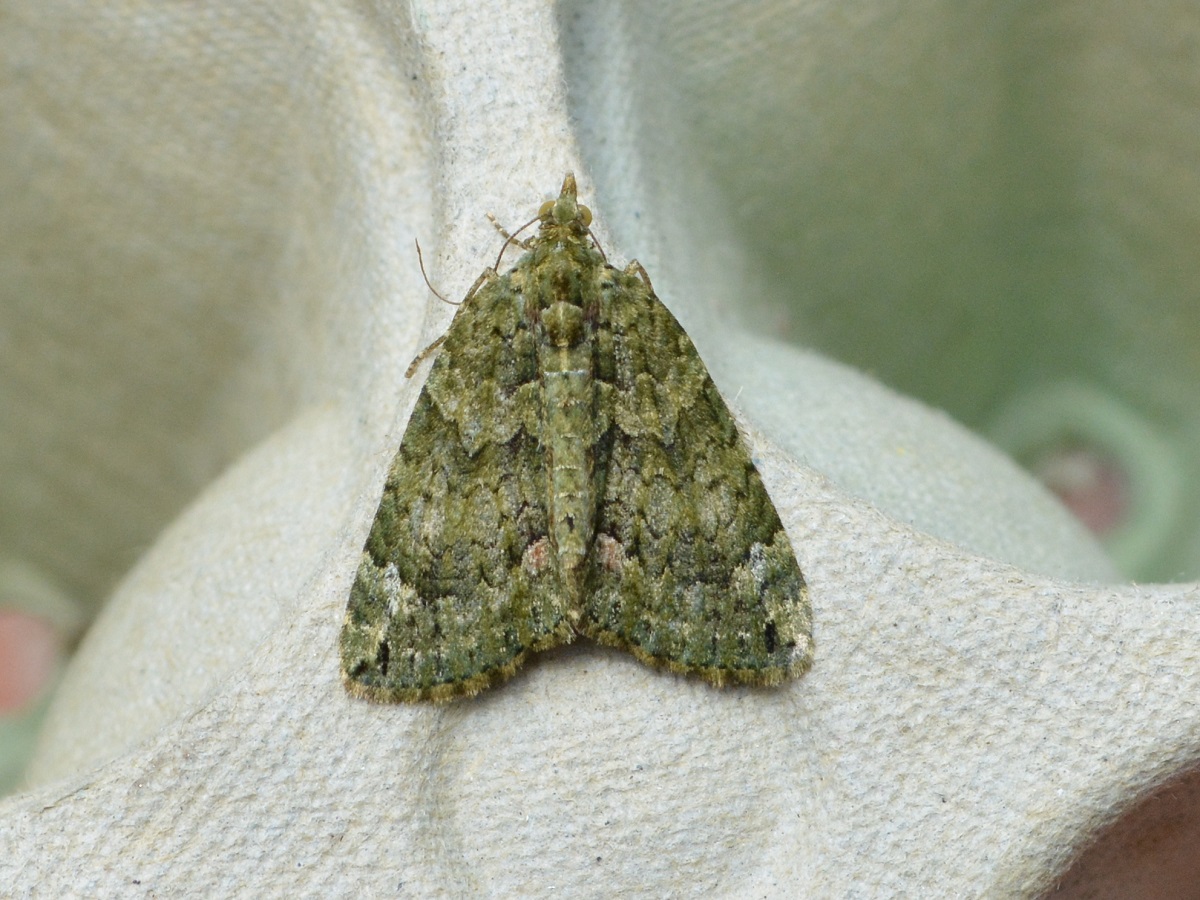
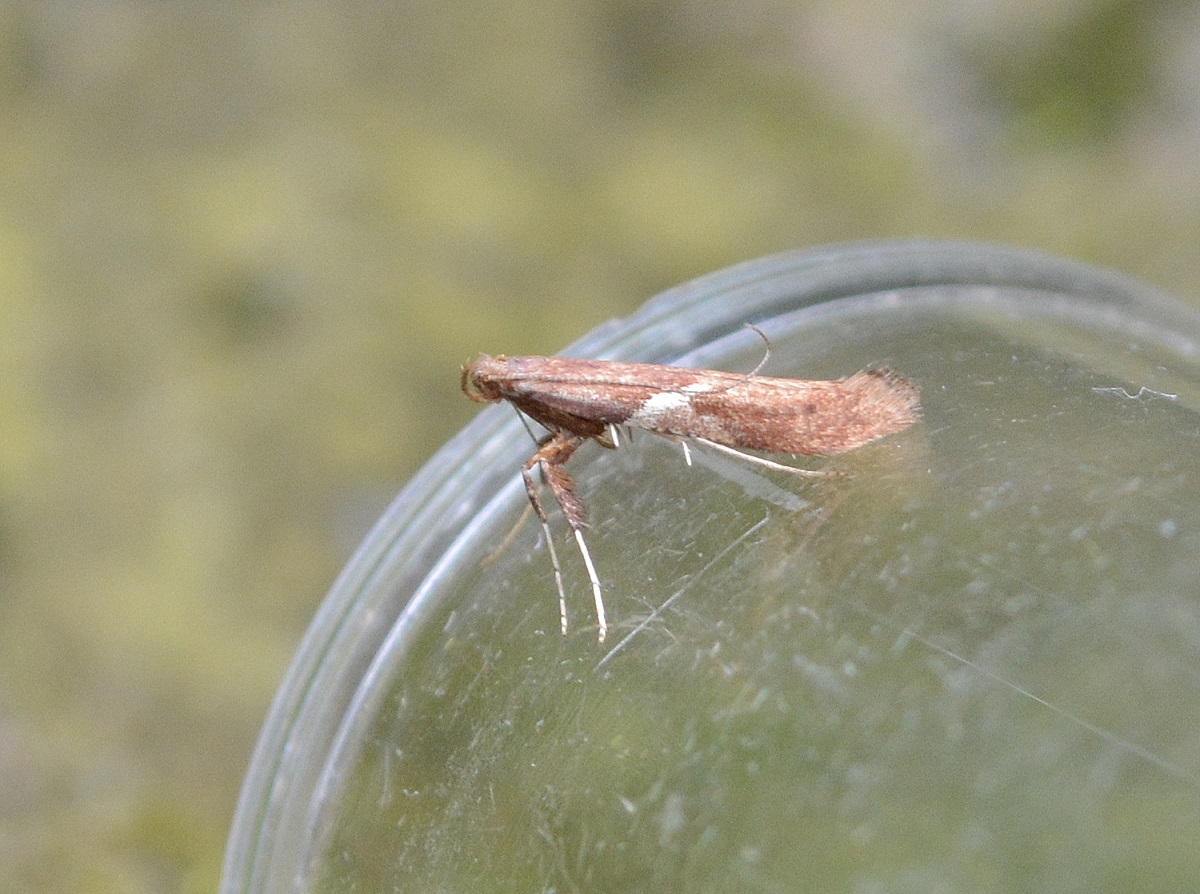
Back home a Red-green Carpet, 2 Caloptilia stigmatella and a Caloptilia elongella were the pick of the moth catch.

Red-green Carpet

Caloptilia stigmatella. Micros are not my forte but some are fairly easy to identify.

Caloptilia elongella. This species can be difficult to separate from Caloptilia betulicola but I am fairly confident this one is elongella.
3rd April
Ringing totals (retraps in brackets) for another session at Billinge were: Willow Warbler 1; Chiffchaff 1 (1); Blackcap 1; Lesser Redpoll 2. The retrap Chiffchaff was originally ringed as a first-year on 20/09/16. There was virtually no movement overhead despite the seemingly perfect conditions and just 1 Siskin and 2 Meadow Pipits were recorded going north during 4 hours of observation.

Female Blackcap. The feathers around the base of the bill were matted with pollen residue, a sure sign of a recently arrived migrant. 
Chiffchaff

The new Chiffchaff had relatively pale legs rather than the text book dark brown or blackish legs.

Back home the moth trap held a surprise in the form of a Water Carpet; a new species for the garden. Having run a moth trap in the garden for many years the catching of a new species has become an increasingly rare and sometimes less than annual event.

Water Carpet: a first for the garden!!!

All in all an interesting few days and a good start to the month.

Unusual Hebrew Character

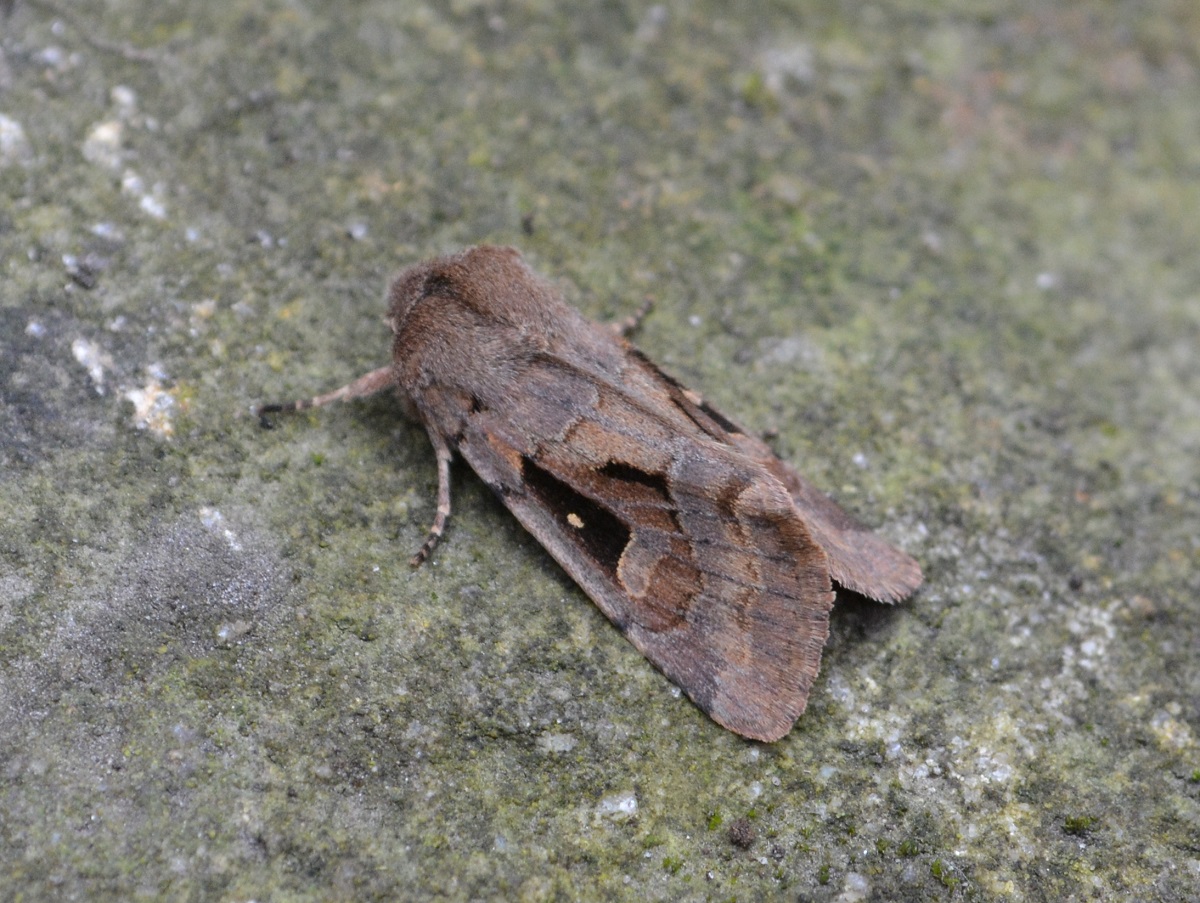
The Hebrew Character (a moth for those that don't know) is named after the black, roughly saddle shaped mark in the middle of its forewing. There is some variation in this marking and there may also be some variation in the general ground colour of the forewing but the Hebrew Characters I usually catch in the garden are what you might describe as much of a muchness.

When I checked the moth trap on the morning of 31st March there was a reasonable catch that included a Red-green Carpet, a Small Quaker, an Early Grey, 8 Common Quaker, a handful of Clouded Drab and a similar number of Hebrew Character. When I am recording the contents the trap the common species like Hebrew Character don't usually get much of a second look but on this occasion one of them really stood out as looking very different.


Unusual looking Hebrew Character.

All the same but different. I hate to think of how many Hebrew Characters I have seen over the years (probably in the low thousands by now) but the unusual looking specimen in the middle was a first for me.
When faced with what appears to be an unusual variant in moths there is sometimes the possibility that it isn't a variant and it turns out to be a different species or if it is a variant that it is a distinct, named subspecies or named form. That isn't the case with this unusual individual and it appears to be a very rare form or aberration that hasn't been named.

There is an image of a similar looking individual on the UK Moths website (link here) which is simply described as an 'unusual form' but that is the only reference to anything similar I can find.

Sunday, 26 February 2017

Just a few moths.

The relatively mild conditions have brought a few moths out over the last week with 4 species caught in the garden moth trap. Three of the species recorded, Clouded Drab, Hebrew Character, Common Quaker, are a bit earlier than normal as their flight periods usually start in March while Pale Brindled Beauty is a winter flying moth and males can be found on the wing from January to March.

Clouded Drab 21/02/2017

Hebrew Character 21/02/2017

Pale Brindled Beauty 21/02/2017

Common Quaker 25/02/2017
There has not been a great deal of change on the bird front but it wont be long before Spring shifts up a gear and there is more to blog about.

Tuesday, 14 June 2016

Hotchpotch

This post is an assortment of things that I have photographed over the last week along with a short summary of recent ringing activities.

Woodpigeons have caught my attention again but this time it was birds that were in the top of an Ash tree (Fraxinus excelsior) across the road from the garden. I had noticed birds spending a lot of time there and hadn't really thought much of it as seeing Woodpigeons in a tree is hardly unusual. However, when I got my bins on them and had a proper look I could see they were eating the leaves and that was a bit of a surprise, to me at least. I knew Woodpigeons were partial to the flowers of Ash but I didn't know they also ate the leaves and they have really thinned out the leaves in the top of this particular tree.

This bird is about to swallow a piece of a leaf and you can also see that some of the smaller branches have been stripped of many of their leaves.
In this image you can easily see some of the leaves that have been partially eaten against the birds upper breast..

Another leaf is about to be eaten.
I am not into flowers in a big way but the meadow areas at the Billinge ringing site have some of the most impressive areas of Ragged Robin (Lychnis flos-cuculi) that I have ever seen and they are at their best at the moment. A few orchids are also flowering and while I hadn't gone looking for nests I found a Meadow Pipits while photographing the flowers.

Ragged Robin (Lychnis flos-cuculi) 08/06/2016

Ragged Robin (Lychnis flos-cuculi) 08/06/2016

Marsh Orchid spp. 08/06/2016, probably Southern Marsh Orchid or Southern hybrid.

Meadow Pipit nest 08/06/2016
Back at home the moth trap hasn't produced anything out of the ordinary but variety and numbers are slowly improving.

Lime Hawkmoth 08/06/2016

Ruby Tiger 08/06/2016

Green Silver-lines and Miller 10/06/2016

Pebble Hook-tip 12/06/2016

Peach Blossom 12/06/2016

Scorched Wing 13/06/2016
On the ringing front a very short ringing session at Crawford on the 9th and another there on the 12th produced combined totals as follows (retraps in brackets): Tree Sparrow 20 (4); House Sparrow 2; Greenfinch 17 (2); Goldfinch 9 (2); Chaffinch 2; Robin 3; Dunnock 2; Whitethroat 1; Great Tit 5 (1).
Tree Sparrows seem to be having a good breeding season as I have now caught 33 at Crawford in the last 10 days with 30 being juveniles.

Juvenile Tree Sparrow
Adult male House Sparrow; an increasingly scarce sight these days.
Studies have shown that individuals with larger black bibs are more dominant.
Juvenile House Sparrow 12/06/2016.
While Tree Sparrows seem to be doing ok the same can't be said for House Sparrows. They have virtually disappeared from my garden.
Juvenile Greenfinch 12/06/2016.
The extensive areas of yellow on the tail and outer webs of the primaries mean this bird can be easily sexed as a male.
I am still catching quite a few new Starlings in the garden (mostly juveniles but a few new adults too) and I have now ringed 287 juveniles over the last 5 weeks. Numbers visiting the garden should tail off rapidly now, as birds disperse and form post breeding flocks, so I don't expect to ring many more this breeding season.


Sunday, 11 August 2013

More moths, birds and bites

On Friday evening I went back to the reedbed site to put out the actinic moth trap for National Moth Night and to ring more Swallows at the roost. I had been on my own for the two previous Swallow roost sessions but this time I was joined by Mike C, a trainee ringer. We caught 73 Swallows which was a comfortable number to deal with and I limited the catch by careful use of the MP3 lures.
 
The next morning I was back there at daft o'clock to check the moth trap and to join John G for an early morning ringing session. The moth trap produced a smaller catch than I expected especially as I had placed it near a patch of Purple Loosestrife that was in full flower. However, the catch included a few reedbed / wetland specialists that I don't or rarely catch at home.
 
Brown-veined Wainscot (Archanara dissolute)
 
Wainscot Veneer aka Reed Veneer (Chilo phragmitella)
 
Silky Wainscot (Chilodes maritimus)
Typical form left and form 'wismariensis' right.
The final tally was 8 Brown-veined Wainscot, 1 Chilo Phragmitella, 5 Silky Wainscot, 3 Small China-mark, 2 Small Phoenix, 2 Dark-barred Twin-spot Carpet, 3 Oblique Carpet, 1 Pale Prominent, 1 Currant Pug and 1 as yet to be identified micro moth.
 
Pale Prominent (Pterostoma palpina).
This species has amazing camouflage and looks like a fragment of dead wood.
It is one species that appears to be expanding its range northwards.
 
Oblique Carpet (Orthonama vittata)
I had to photograph this species in a plastic pot hence the less than sharp photo.
We had 8 nets up and catching was what you might call slow but steady. The target species were Reed and Sedge Warblers and they made up just over half the catch. There doesn't seem to be any evidence of late nesting by Reed Warblers as often happens and no retrap adults were caught. Mixed flocks of tits and warblers, as would be expected at this time of year, were conspicuous by their absence. Catching tailed off by 9:30 am and we took the nets down shortly after as we planned to come back in the evening for another ringing session at the Swallow roost.
 
adult Reed Warbler (Acrocephalus scirpaceus)
 
juvenile Reed Bunting (Emberiza schoeniclus)
Conditions were near perfect when we returned in the evening with generally overcast conditions and a very light breeze. John had got there ahead of me and had put up 3 nets. A few Swallows were already around so we set the MP3 players and waited for the rest to arrive. As the number of birds started to build up it as obvious that there were a lot more Sand Martins in the flock than there had been or we normally see. This increase in Sand Martins was reflected in the evening ringing total of 103 Swallows and 25 Sand Martins.

juvenile Sand Martin (Riparia riparia)
One less than pleasant consequence of all the recent ringing activity has been the number of insect bites I have suffered despite the use of repellents. I don't mind a few mosquito bites and don't react adversely to them but some little biting black flies took a real liking to an area of skin near my right elbow. They left a number of painful lumps and the area became inflamed and hot to the touch for a few hours. Eventually I managed to get a photo of one of the little sods but have yet to identify it to a species but it is probably one of the Blackflies (Simuliidae).

Blackfly (simulium spp?)
 
Ouch


Ringing totals for 10/08/13 with retraps in brackets.
Reed Warbler  19 (1)
Sedge Warbler  8 (1)
Reed Bunting  6
Willow Warbler  10
Chiffchaff  1
Whitethroat  1
Blackcap  3
Willow Tit  2
Wren  1
Blue Tit  (1)
Swallow  103
Sand Martin  25
Total  182


Monday, 8 July 2013

'One for joy'

The moth trap is producing a few new species for the year on a regular basis at the moment but numbers and variety are still well below what is normally expected at this time of year. Catches are around 50 to 75% down on those of a typical July. This morning was no exception with a relatively poor catch but 4 species of macro moth were new for the year.

Garden moth trap this morning with lid removed.
The most striking of new species was a 'Magpie'. I have only caught the odd one in the garden over the past 10 years or so making it a noteworthy record. However this post was prompted by an email from a friend who runs a moth trap in his garden about a mile away. The email was titled 'An AWOL returns' and simply said 'Magpie Moth at my MV last night ... first one here for 23 years (Aug 1990)!!!!'

Magpie (Abraxas grossulariata)
Many so called common and widespread species like the Magpie often only occur at a rather low density and are far less common now than they were 20 or 30 years ago. A 23 year wait just goes to show what a low density can really mean these days. The text books and on-line resources just can't keep pace with the changes in populations and distribution that many of our moth species are currently experiencing. More worrying is the fact that these changes are not being recognised as indicators of the health of our environment to the degree they really should be. For more information on moths and moth recording visit the Moths Count website here.

The other new species of macro moth for the year were as follows:


Burnished Brass (Diachrysia chrysitis)

Pale-shouldered Brocade (Lacanobia thalassina)

Dingy Shears (Parastichtis ypsillon)


Sunday, 2 June 2013

To Anglesey and back.

I spent the last week camping on Anglesey with my youngest son, Jack and Bryn the dog. It was more of a getaway than a birding or mothing trip but we do a bit of both pretty much wherever we go. The weather was not on our side as the cold spring continued to hold its grip for most of the week; the first few days were more like early March than late May.

I had taken an actinic moth trap with me but the first night drew a blank as it was so cold. The weather was even worse the next night with strong winds and heavy rain so I didn't even bother putting it out. Things only improved marginally from there with catches in low single figures. Only 10 moths were caught over 5 nights which is a dismal total for the location at this time of year and testimony to the protracted winter and cold spring. Best of the meagre pickings were a Water Carpet and a Puss Moth neither of which I catch at home.

Water Carpet (Lampropteryx suffumata)

Puss Moth (Cerura vinula), a rather worn and weather beaten individual.

What birding we did was secondary to walks around some of our favourite parts of the coast but then you can't do one without the other. A few migrants were still in evidence with 3 Greenland Wheatears present in one of our favourite bays. Amongst the waders groups of migrant Ringed Plovers stood out in particular. Generally though birds were perhaps thinner on the ground than might be expected especially in the case of some of the breeding species, if you exclude corvids that is. Lapwings were conspicuous by their absence from all the farmland areas we drove through and visited not least the farm we camped at.
 
female Wheatear and almost certainly of the Greenland race or 
at least as certain as you can be without catching and measuring it.

 
Same female as above.


Male Wheatear but a bit more tricky as to race and not an obvious
'Greenland' type but certainly still on migration.
 
Although there are more Dunlin in this shot groups of Ringed Plover were much in evidence.

Bryn has learned that he has to be patient when we are taking photos,
 some of the time at least.
On the plus side the increase in Little Egrets is hard to overlook and doesn't seem to have been dented by the recent hard winters. On one of our walks around Red Wharf Bay 5 were feeding on the falling tide including a colour ringed bird which was probably ringed at Bangor on the mainland. I have sent the details of the sighting off and will give an update on its life history in due course.


Little Egrets, colour ringed bird on right.
Colour ringed Little Egret.
On returning home yesterday I set the moth trap in the garden out of habit rather than expectation of a good catch. On checking it this morning there were only 3 moths but all 3 were new for the year - a Lime Hawk-moth, a Flame Shoulder and a Diamond-back Moth which is a migrant to the UK. The latter being the least expected given the cold weather and wind direction. The lack of moths and insects in general over the last few weeks is likely to have a profound effect on breeding birds that normally feed their young on insects and caterpillars in particular. The effects of the long winter and cold spring are likely to be felt and reported on for a long time yet.

Lime Hawk-moth (Mimas tiliae)

Flame Shoulder (Ochropleura plecta)
Diamond-back Moth (Plutella xylostella)